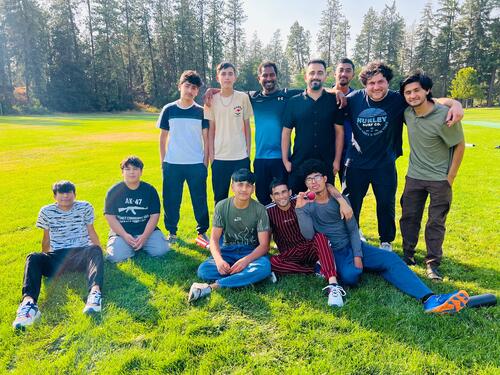
A refugee boy came looking for cricket in Spokane.
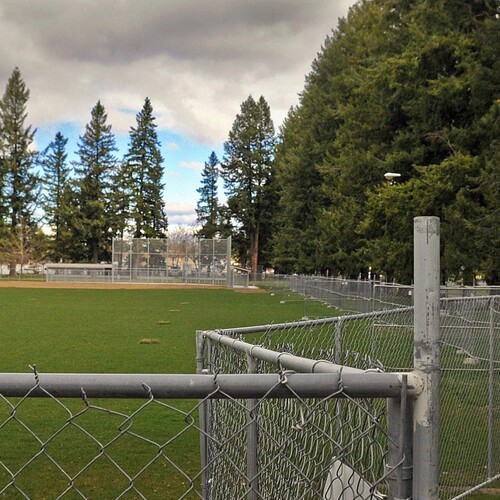
In 2022, a twelve-year-old boy arrived in Spokane as a refugee from Afghanistan. He heard there were men playing cricket at Underhill Park, and came down to see.
He fielded. He batted a little. He was desperate to show what he could do.
He had grown up with the game. Back home, cricket was everywhere: in the streets, in the yards, on any patch of open ground. Here it was almost nowhere. Underhill was the one place it existed, and what he found there was a social club of grown men: working professionals who paid their subscriptions to play on the weekend.
Nobody turned him away, but he didn't find a place to belong either. No group his own age. Nobody from his school out there playing alongside him.
Nobody saw him again.
He fielded. He batted a little. He was desperate to show what he could do.
He had grown up with the game. Back home, cricket was everywhere: in the streets, in the yards, on any patch of open ground. Here it was almost nowhere. Underhill was the one place it existed, and what he found there was a social club of grown men: working professionals who paid their subscriptions to play on the weekend.
Nobody turned him away, but he didn't find a place to belong either. No group his own age. Nobody from his school out there playing alongside him.
Nobody saw him again.
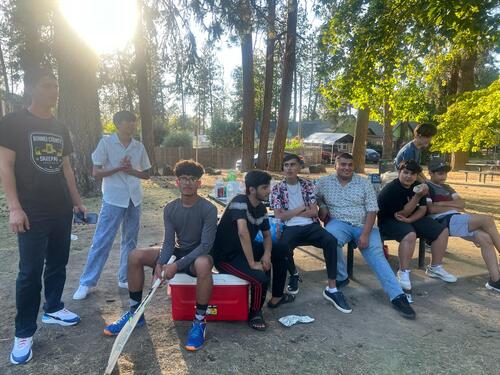
Later that year, a different boy spotted Manoj Thirupal, a member of the adult cricket team, getting into his car at Underhill after practice. Ahmad ran across the parking lot and asked: would Manoj teach him and his friends? He could bowl fast, he said. Full volume, all excitement.
In fact, ever since the first boy's visit to the cricket ground, Manoj had been reaching out to organizations that might support a club for refugee youth. So he watched Ahmad and his friends play. Each of them took a turn bowling, batting, showing what they could do, wanting to be seen. Manoj coached them right there. Then he asked about them: where they had come from, how they had learned, who had taught them.
These kids' talent was obvious. Rough, self-taught in streets and backyards far from here, they'd never been shown to a coach. What these kids lacked wasn't ability. It was a place to belong and someone to teach them.
In fact, ever since the first boy's visit to the cricket ground, Manoj had been reaching out to organizations that might support a club for refugee youth. So he watched Ahmad and his friends play. Each of them took a turn bowling, batting, showing what they could do, wanting to be seen. Manoj coached them right there. Then he asked about them: where they had come from, how they had learned, who had taught them.
These kids' talent was obvious. Rough, self-taught in streets and backyards far from here, they'd never been shown to a coach. What these kids lacked wasn't ability. It was a place to belong and someone to teach them.
Cricket in the Inland Northwest runs on adult social clubs, and what was missing was a way in for anyone who couldn't pay.
Some of our young people work during the week, and getting to practice is hard even when they badly want to be there. Away games mean leaving Spokane at half past five in the morning and getting home near midnight. These boys are studying, working, and still finding time for a game they played every day at home. They have earned a Saturday. The game was here. It was just behind doors these kids had no key to.
Some of our young people work during the week, and getting to practice is hard even when they badly want to be there. Away games mean leaving Spokane at half past five in the morning and getting home near midnight. These boys are studying, working, and still finding time for a game they played every day at home. They have earned a Saturday. The game was here. It was just behind doors these kids had no key to.
"I had been that kid. Learning the game in the streets, in the slums, raw and excited and with nobody there to teach me, and no space made for me and my friends either. We had no resources, and our families had none to give us. And back in India, the places where cricket was properly played had their own rules about who belonged: your background, your caste, your religion.”
— Coach Manoj
— Coach Manoj
Finding organizational support
So Manoj started coaching. He bought the gear himself and carried it to the park each week, teaching any kid who wanted to learn. Word spread the way it does among kids. One told a friend, that friend told a brother.
Manoj wrote to Sam Smith, a family friend and Co-Founder and Director of Immigrant Legal Aid at Manzanita House. When Manzanita House needed a sport to add to one of their after-school programs, Sam introduced Manoj to Irshad Ahmad Rahimi, their Cultural Engagement Navigator. Manzanita House secured seed funding from Innovia Foundation through LaunchNW's EngageIRL program, and the volunteer coaching Manoj had been doing since 2022 became a funded after-school program in 2025.
One kid's dream was about to become a program.
So Manoj started coaching. He bought the gear himself and carried it to the park each week, teaching any kid who wanted to learn. Word spread the way it does among kids. One told a friend, that friend told a brother.
Manoj wrote to Sam Smith, a family friend and Co-Founder and Director of Immigrant Legal Aid at Manzanita House. When Manzanita House needed a sport to add to one of their after-school programs, Sam introduced Manoj to Irshad Ahmad Rahimi, their Cultural Engagement Navigator. Manzanita House secured seed funding from Innovia Foundation through LaunchNW's EngageIRL program, and the volunteer coaching Manoj had been doing since 2022 became a funded after-school program in 2025.
One kid's dream was about to become a program.

The first official season
In 2025, Ahmad and his friends played for the official first year of the after-school program. For the first time there was equipment for the kids: bats, pads, helmets, balls, paid for by the program rather than bought out of Manoj’s pocket. The after-school program had a name, a schedule, and support behind it.
Around twenty-five players came through that first year. Thirteen are training now, though the number moves — some are still learning, some are working, and cricket has to fit around what else a young person is carrying. Middle and high school students mostly, mostly Afghan, though anyone is welcome, and no one needs experience to start.
In 2025, Ahmad and his friends played for the official first year of the after-school program. For the first time there was equipment for the kids: bats, pads, helmets, balls, paid for by the program rather than bought out of Manoj’s pocket. The after-school program had a name, a schedule, and support behind it.
Around twenty-five players came through that first year. Thirteen are training now, though the number moves — some are still learning, some are working, and cricket has to fit around what else a young person is carrying. Middle and high school students mostly, mostly Afghan, though anyone is welcome, and no one needs experience to start.
Watch Ahmad share about the team. (If the video won't play, try opening it in a different browser.)
Manoj teaches leadership for a living, and it shows in how he runs a session. Players tend to arrive treating every opponent as an enemy, carrying hierarchies with them. But in the Spokane Cricket Academy, things start to shift. Players are coached to play for each other rather than for themselves. They stop remarking on each other’s bodies. A kid who is behind gets coached, not compared. Everyone is welcome to belong here — not for what they can do, but for who they are.
Building a Sustainable Future
From seed funding to sustainable support
The Spokane Cricket Academy now relies on donors to meet ongoing equipment needs, league registration fees, travel costs, and eventually to pay our coaches. Donors are what let us stand on our own. Grants and larger funders come after that.
Where our players go
Local adult clubs have occasionally included one or two youth cricketers in their roster for games in Spokane and Seattle. These are membership clubs, so these young players are holding their own against grown men from across the region.
The Spokane Cricket Academy now relies on donors to meet ongoing equipment needs, league registration fees, travel costs, and eventually to pay our coaches. Donors are what let us stand on our own. Grants and larger funders come after that.
Where our players go
Local adult clubs have occasionally included one or two youth cricketers in their roster for games in Spokane and Seattle. These are membership clubs, so these young players are holding their own against grown men from across the region.
The Hawks
The Eastside Thunder Hawks began in 2023 as the Eastside Chargers. Neither Spokane nor Pullman had the numbers for a full eleven in the T20 league. Spokane wanted its own side, and so did Pullman, but together we were stronger than either of us alone. Manoj proposed a collaboration as the more sustainable path — both clubs as one side, representing eastern Washington in the league, supported from the start by WSU professor Amit Thakar. It asked players to practise something none of them had done before. They have climbed every season since: Division D, then C, now B. Three promotions in three years, and the semi-finals twice.
"This collaboration represents a break from the past and a recognition that cricket is not just about winning matches but also about nurturing the spirit of the game. Inspired by this vision, Manoj Thirupal, an experienced Spartan, took the lead in establishing the Eastside Chargers." — Spokane Cricket Club, October 10, 2023
The club waives fees for middle and high school players. The adults carpool, cover the cost themselves, and give the young ones real match experience rather than a place on the bench — no carrying water, no waiting your turn, no shouting, and nobody asks a boy for gas money. They are not made to defer. They are invited to belong.
The Eastside Thunder Hawks began in 2023 as the Eastside Chargers. Neither Spokane nor Pullman had the numbers for a full eleven in the T20 league. Spokane wanted its own side, and so did Pullman, but together we were stronger than either of us alone. Manoj proposed a collaboration as the more sustainable path — both clubs as one side, representing eastern Washington in the league, supported from the start by WSU professor Amit Thakar. It asked players to practise something none of them had done before. They have climbed every season since: Division D, then C, now B. Three promotions in three years, and the semi-finals twice.
"This collaboration represents a break from the past and a recognition that cricket is not just about winning matches but also about nurturing the spirit of the game. Inspired by this vision, Manoj Thirupal, an experienced Spartan, took the lead in establishing the Eastside Chargers." — Spokane Cricket Club, October 10, 2023
The club waives fees for middle and high school players. The adults carpool, cover the cost themselves, and give the young ones real match experience rather than a place on the bench — no carrying water, no waiting your turn, no shouting, and nobody asks a boy for gas money. They are not made to defer. They are invited to belong.
Learning to play together across different languages, cultures and skill levels.
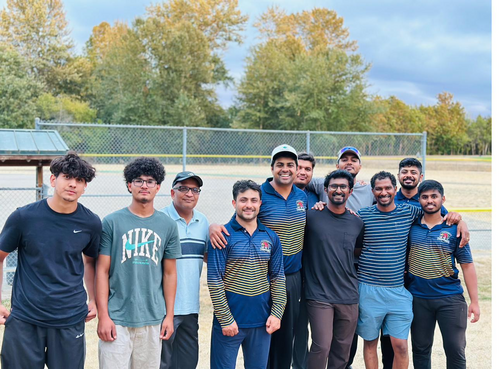
Refugees, immigrants, students, teachers, engineers. Pakistani, Afghan, Bangladeshi and Indian players on the same side.
"Last weekend one of our young bowlers was hit for six. Next ball he took the batsman's wicket, and he went over and told him he had taken his revenge. I did not know he had said anything. While the next batsman was walking out, he and another boy came to me on the field: Coach, I am so sorry, I said that to him. That is normal in a lot of sport. What has to be learned is what sportsmanship actually means. I have been coaching them that it is not revenge. It is recognising that the other man came to play as much as we did, and being grateful for that. Nobody had to tell him. He came on his own."
— Coach Manoj
— Coach Manoj
How our players get games
In both the long and short formats, our players turn out for local adult clubs. Some waive fees for school-age players; where they do not, the program covers the cost. Middle and high school students, and young people working and studying, cannot pay their own way. In future we would rather our players were invited for what they bring to a side, their numbers and their skill, than turned away for money their families do not have.
As of today, Ahmad and Ali are with the Hawks in Division B this season. Ahmad is fifth in the [Northwest Cricket league] for wickets taken; Ali is nineteenth in the league rankings out of 163 players.
Najib and Khalid are with the Spokane Spartans in Division D. A fifth player had a place but could not take it — his work would not release him on Saturdays. The rest are training to debut next year with the Otters.
In both the long and short formats, our players turn out for local adult clubs. Some waive fees for school-age players; where they do not, the program covers the cost. Middle and high school students, and young people working and studying, cannot pay their own way. In future we would rather our players were invited for what they bring to a side, their numbers and their skill, than turned away for money their families do not have.
As of today, Ahmad and Ali are with the Hawks in Division B this season. Ahmad is fifth in the [Northwest Cricket league] for wickets taken; Ali is nineteenth in the league rankings out of 163 players.
Najib and Khalid are with the Spokane Spartans in Division D. A fifth player had a place but could not take it — his work would not release him on Saturdays. The rest are training to debut next year with the Otters.

The Otters, and what we still need
In 2027, the Spokane Cricket Academy launches its own youth team, the Spokane Otters, playing the short format from late July to the first week of September.
Next year the program covers the fuel and the food, rather than a few adults absorbing it between them. That is what makes it last.
We hope to cook our own food for away games. Students and adults take turns, the program provides the groceries, and the team eats together at the park after the day's two matches — the team meeting and the meal in one.
We are also looking for a twelve-seat van we could borrow from mid-July to mid-September, for the Saturdays we play. We leave in the morning and come back the same day, so a volunteer could drive the boys there and back.
In 2027, the Spokane Cricket Academy launches its own youth team, the Spokane Otters, playing the short format from late July to the first week of September.
Next year the program covers the fuel and the food, rather than a few adults absorbing it between them. That is what makes it last.
We hope to cook our own food for away games. Students and adults take turns, the program provides the groceries, and the team eats together at the park after the day's two matches — the team meeting and the meal in one.
We are also looking for a twelve-seat van we could borrow from mid-July to mid-September, for the Saturdays we play. We leave in the morning and come back the same day, so a volunteer could drive the boys there and back.
Added coaching to meet the demand
As our cricketers grow in their skills, they need more personalized coaching. In 2026, one volunteer coach is coaching thirteen players — as many as one person can hold. More are waiting for a place. Already the older players help the younger ones, and friends learn from each other; that is how we aim to pass the game on. Our dream is to bring on additional coaches, so the program does not rest on one person.
If you can spare a Tuesday afternoon, no cricket background is needed — the coaching stays with the head coach; a second adult is what lets us take more boys. A baseball coach, or anyone who plays, would be especially welcome. The two games teach each other, and we have borrowed from baseball for years. Even one session on throwing or power hitting would help.
As our cricketers grow in their skills, they need more personalized coaching. In 2026, one volunteer coach is coaching thirteen players — as many as one person can hold. More are waiting for a place. Already the older players help the younger ones, and friends learn from each other; that is how we aim to pass the game on. Our dream is to bring on additional coaches, so the program does not rest on one person.
If you can spare a Tuesday afternoon, no cricket background is needed — the coaching stays with the head coach; a second adult is what lets us take more boys. A baseball coach, or anyone who plays, would be especially welcome. The two games teach each other, and we have borrowed from baseball for years. Even one session on throwing or power hitting would help.
The Spokane Cricket Academy exists today to keep coaching the players who are here, bring back the ones who are waiting, open the same door to kids who have not found it yet, and to keep providing that place of belonging.
$284 buys a boy his own kit. Twelve of our thirteen share.
$284 buys a boy his own kit. Twelve of our thirteen share.