
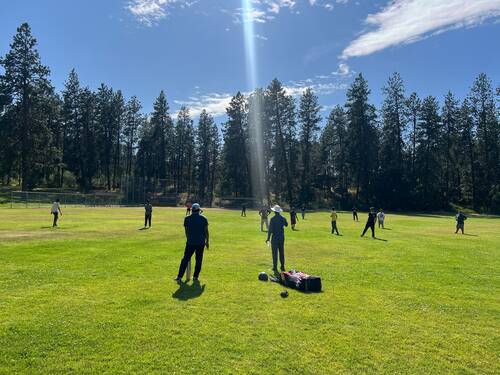
Coached, not compared.
What he teaches
Around twenty-five young people have come through the program, coached by one man most weeks. He teaches all of it: batting, bowling, fielding, wicketkeeping, and the parts of the game that decide matches, like running between the wickets and knowing where to stand. He was a fast bowler himself, but nobody here is pushed into a specialism before they have played enough to know what they are.
He brings in players from the Spartans and other clubs around the region to teach what they are best at: a batter to work on batting, a bowler on bowling, a keeper behind the stumps, someone else on fielding. The ask is the same every time. Know your craft, and be willing to teach it to someone starting from nothing.
He borrows from other sports too. Throwing technique from baseball, the mechanics behind power hitting. He goes and learns it, then brings it back to the field on a Tuesday.
Across a language he doesn't share
He does not speak their language. Most of the players grew up speaking Dari or Pashto, and English is a second language for all of them. Everything he teaches has to cross that gap: technique, yes, but also how a team talks to itself.
It took three years before they really listened. Not because they were difficult, but because trust takes that long, and because playing properly is different from playing with your cousins. He says the job asks one thing above all: you cannot be frustrated with them. There is a great deal going on in these young lives, and they are only just starting to learn.
None of this comes only from cricket. It comes from what he lived through himself, from the Ignatian practice of dialogue he has lived alongside the Della Strada Jesuit community, and from his training in organizational leadership and his doctorate at Gonzaga’s School of Leadership Studies, where he now teaches.
Much of the method is helping someone find their own reasons to change rather than being told to. Listen first. Take the whole person seriously, not just the player. A player who is behind gets coached, not measured against the one in front.
What gets unlearned
Much of the work is unlearning, and it is the same work in any dressing room in the world. Who gets listened to and who does not. Remarks about each other’s bodies. The idea that toughness means putting someone down, or that a coach, a captain, or a teammate shows he cares by shouting. None of it survives long here, and none of it is shouted out of them either.
In its place, voice. Say something when a thing is unfair. Say what you need. Ask a question in front of other people, not as a risk but to get something clear. And dialogue rather than argument: on a field full of strong opinions, the aim is not to win the point but to hear what the other player is seeing.
Nobody is rushed. He will not put a player on a bus to a league game before they are ready, which is part of why there is a waiting list rather than a scramble. It is also why the group is capped at what one coach can safely hold. A second coach is the difference between fifteen young people waiting and fifteen playing.
The team equipment does not live in his garage. He handed it to the players. Coaching is once a week, but they play all week, at whatever park they can get to, and they come back on Tuesday wanting to show him what they have been working on. Kit locked away six days out of seven is no use to anyone.
Where it leads
In that first season more than one of them walked off a field angry. Done with it, they said. This was not for them.
In the street, playing with cousins, everyone gets a turn. In a real game, with senior players and a result at stake, you might not bat at all. They had not been given the chance they expected and had nowhere to put that. Manoj knew the feeling from the other side of the world.
Ask those same players now and they will tell you themselves how much has changed in the way they think. Not their averages. The way they think.
The clearest sign it is working is that he is no longer the only one doing it. The older players he coached first are now teaching the younger ones, in their own language, in their own way.
Around twenty-five young people have come through the program, coached by one man most weeks. He teaches all of it: batting, bowling, fielding, wicketkeeping, and the parts of the game that decide matches, like running between the wickets and knowing where to stand. He was a fast bowler himself, but nobody here is pushed into a specialism before they have played enough to know what they are.
He brings in players from the Spartans and other clubs around the region to teach what they are best at: a batter to work on batting, a bowler on bowling, a keeper behind the stumps, someone else on fielding. The ask is the same every time. Know your craft, and be willing to teach it to someone starting from nothing.
He borrows from other sports too. Throwing technique from baseball, the mechanics behind power hitting. He goes and learns it, then brings it back to the field on a Tuesday.
Across a language he doesn't share
He does not speak their language. Most of the players grew up speaking Dari or Pashto, and English is a second language for all of them. Everything he teaches has to cross that gap: technique, yes, but also how a team talks to itself.
It took three years before they really listened. Not because they were difficult, but because trust takes that long, and because playing properly is different from playing with your cousins. He says the job asks one thing above all: you cannot be frustrated with them. There is a great deal going on in these young lives, and they are only just starting to learn.
None of this comes only from cricket. It comes from what he lived through himself, from the Ignatian practice of dialogue he has lived alongside the Della Strada Jesuit community, and from his training in organizational leadership and his doctorate at Gonzaga’s School of Leadership Studies, where he now teaches.
Much of the method is helping someone find their own reasons to change rather than being told to. Listen first. Take the whole person seriously, not just the player. A player who is behind gets coached, not measured against the one in front.
What gets unlearned
Much of the work is unlearning, and it is the same work in any dressing room in the world. Who gets listened to and who does not. Remarks about each other’s bodies. The idea that toughness means putting someone down, or that a coach, a captain, or a teammate shows he cares by shouting. None of it survives long here, and none of it is shouted out of them either.
In its place, voice. Say something when a thing is unfair. Say what you need. Ask a question in front of other people, not as a risk but to get something clear. And dialogue rather than argument: on a field full of strong opinions, the aim is not to win the point but to hear what the other player is seeing.
Nobody is rushed. He will not put a player on a bus to a league game before they are ready, which is part of why there is a waiting list rather than a scramble. It is also why the group is capped at what one coach can safely hold. A second coach is the difference between fifteen young people waiting and fifteen playing.
The team equipment does not live in his garage. He handed it to the players. Coaching is once a week, but they play all week, at whatever park they can get to, and they come back on Tuesday wanting to show him what they have been working on. Kit locked away six days out of seven is no use to anyone.
Where it leads
In that first season more than one of them walked off a field angry. Done with it, they said. This was not for them.
In the street, playing with cousins, everyone gets a turn. In a real game, with senior players and a result at stake, you might not bat at all. They had not been given the chance they expected and had nowhere to put that. Manoj knew the feeling from the other side of the world.
Ask those same players now and they will tell you themselves how much has changed in the way they think. Not their averages. The way they think.
The clearest sign it is working is that he is no longer the only one doing it. The older players he coached first are now teaching the younger ones, in their own language, in their own way.
The program runs free, in partnership with Manzanita House. As we bring on additional coaches and volunteers, background checks will be part of it. If you would like to help keep it running, or to volunteer a session, get in touch, or see what a season costs.